Mekotek Tradition of Munggu Village: History, Meaning, and Festivities
Desa Munggu
2026/06/27
127
Getting to Know Mekotek: A Unifying Tradition from Munggu Village
Munggu Customary Village in Mengwi District, Badung, holds an iconic cultural heritage known as Mekotek. This tradition is more than just a tourist attraction; it is a sacred ritual preserved for generations by the local community as a form of gratitude and a way to ward off misfortune.
A Brief History
The Mekotek tradition is believed to have existed since the era of the Mengwi Kingdom in the 1700s. Originally, this tradition was performed to welcome the Mengwi Kingdom's troops returning home in victory after the war in Blambangan.
In the past, warriors used iron spears. However, to prevent injuries and for safety reasons during the Dutch colonial period, the weapons were replaced with pulet wood sticks measuring 2 to 3 meters in length.
Meaning and Observance
Mekotek is held every Kuningan Day (10 days after Galungan). The name "Mekotek" is derived from the sound of the wood clashing against each other—tek, tek, tek—during the ritual.
Main Procession:
-
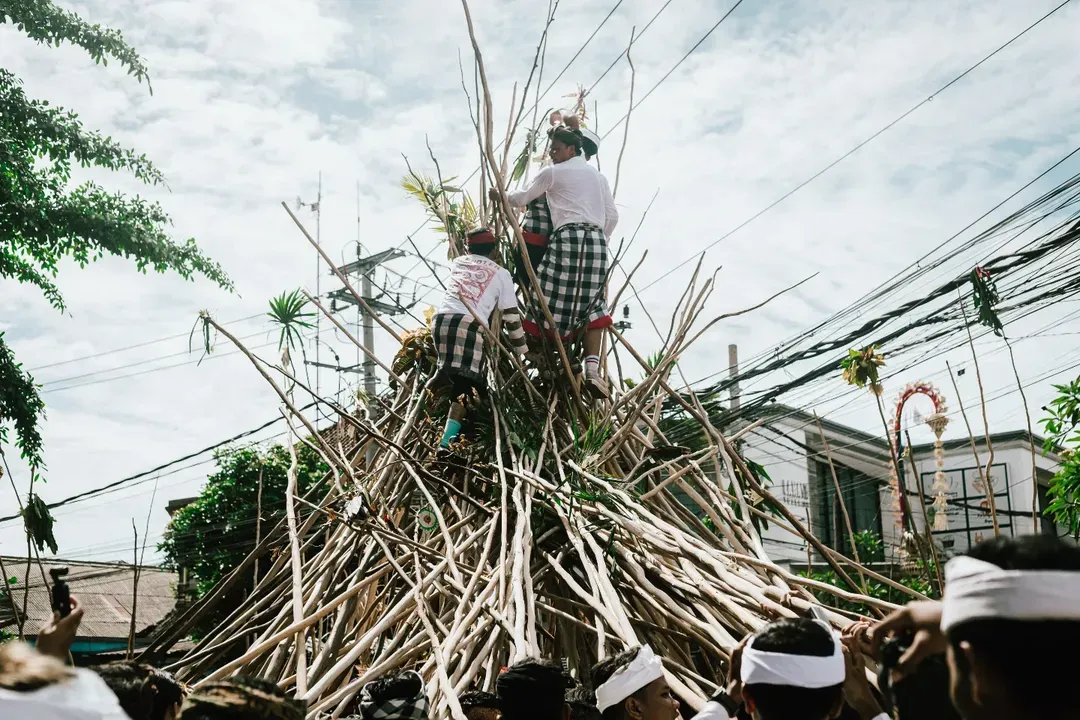
Merging the Poles: Hundreds of male villagers gather and unite their wooden poles in the air, forming a cone-like shape (resembling a mountain).
-
Test of Courage: Brave participants climb to the top of the pole stack to give commands or simply display the spirit of victory.
-
Village Procession: Participants parade around the village, accompanied by the uplifting sounds of traditional Balinese gamelan.
Why is Mekotek So Important?
For the people of Munggu Village, Mekotek is a mandatory ritual. The community believes that if this tradition is not performed, disasters or disease outbreaks (gering) will plague the village. Additionally, Mekotek serves to strengthen the bond of brotherhood among residents.
Travel Tips: If you wish to witness it firsthand, visit Munggu Village precisely on Saturday Kliwon Kuningan. Be sure to wear light Balinese traditional attire and maintain proper etiquette throughout the ritual.